
Building Safer Systems Through Root Cause Analysis
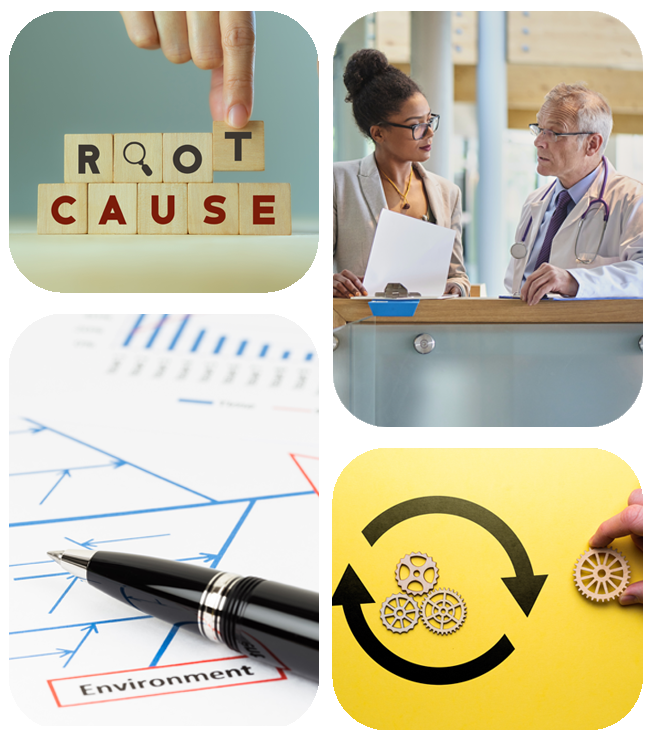
Overview
Healthcare organizations continue to face challenges transitioning from a “person approach” to a true systems-based understanding of error. Although root cause analysis (RCA) is widely used, many analyses fail to identify actionable system vulnerabilities or to result in sustainable change. This gap is often driven by limited application of human factors engineering (HFE)—the science of designing systems that align with human capabilities and limitations.
This four-course series equips risk and patient safety professionals with practical skills to conduct more effective, systems-focused RCAs. Participants will learn how human factors contribute to errors, how to identify latent system weaknesses, and how to translate findings into high-impact, sustainable interventions. Drawing on cross-industry applications of HFE, the series emphasizes actionable strategies to strengthen analysis, improve action planning, and ultimately reduce patient harm.
Series Summary
This four-course as well as three virtual live skill sessions to allow learners to apply concepts from the online education in scenario-based discussions.
Session(s) Available for Registration
Courses are available for six months and are self-paced (i.e., learners can start and stop courses at any time.). Courses are linear in nature, meaning you must complete the courses in a fixed, sequential order.
No sessions available at this time.
Courses in This Series
Access a suite of four courses that provide CE credits and are designed for risk professionals and other interested members of the healthcare team.

The What and Why of Root Cause Analysis
Discover how RCA uncovers the true drivers of adverse events and supports lasting improvement. This course provides an introduction to RCA’s purpose and structure, helping participants understand how the process moves beyond addressing surface symptoms by identifying underlying causes. By the end of the course, learners will be able to define the purpose of an RCA and describe the essential steps involved in its process.

Initiation of a Root Cause Analysis
Learn how to initiate an effective RCA following an adverse event or significant near miss. This course guides participants in identifying, assessing, and prioritizing events that warrant an RCA based on actual or potential severity and probability. It also covers immediate response strategies to prevent further harm and preserve essential information for a thorough investigation. Participants will understand how to prioritize events for RCA and apply best practices to prepare for a successful analysis.

Event Investigation and Analysis
This course focuses on the principles of effective action planning within RCA. Participants will learn how to move from identifying causal and contributing factors to designing strong, system-based interventions that reduce reliance on human memory and mitigate risk. Using frameworks such as the Human Factors Analysis and Classification System (HFACS) and the Human Factors Intervention Matrix, tools like FACES, and the action hierarchy, learners will develop practical skills to prioritize, evaluate, and implement high-value actions. By the end of this session, participants will be better equipped to design actionable, sustainable improvement plans that address underlying system vulnerabilities, strengthen safety barriers, and reduce the likelihood of event recurrence.

Planning for Improvement
Advance your RCA skills by learning how to translate investigation findings into impactful action plans and measurable outcomes. This course guides participants in developing strong, evidence‑based interventions, building structured implementation plans, and establishing clear metrics to evaluate the effectiveness of corrective actions over time. By the end of the course, learners will be able to design high‑quality action plans that prevent reoccurrence, create measurement strategies to track progress, and effectively communicate RCA findings to multidisciplinary teams and senior leaders.
Pricing
This program is complimentary to Coverys policyholders and includes access to collaborative sessions with peer groups led by industry experts, videos, case studies, and interactive activities delivered via a platform ideal for asynchronous, blended learning.
Interested in collaborating further to design a customized program specific to your organizational needs? Learn more or contact us directly at RMDPhelp@med-iq.com.
Expert Faculty

Kathy is the Associate Director of Education and Quality at Med-IQ. In her current role, she oversees more than 1,000 accredited educational activities each year, ensuring compliance with accreditation standards and educational quality.
Kathy has been a registered nurse for more than 36 years, with experience in the emergency department, critical care, and continuing medical education areas. She earned her Bachelor of Science in Nursing from Michigan State University and Master of Science in Nursing from Western Governors’ University. Kathy has presented nationally at the AACN’s National Teaching Institute and Critical Care Exposition, the Alliance annual conference, and the ASHRM annual conference. She is a former President of the Michigan Society of Healthcare Risk Management’s Board of Directors.
FAQs